

Dukes Estate Agency

Dukes Estate Agency · Buying Guide

Buying Guide

Know the next decision before you need to make it.

Nine practical decisions, from setting your budget to collecting the keys. Written for buyers in England and Wales.

Start with your budget Browse properties

Applies to
England and Wales
Decisions
Nine
Reviewed
10 August 2026

The nine buying decisions

Phase 1 of 3

Prepare before you search.

Work out what you can afford, prepare the evidence and decide what a suitable home must do for you.

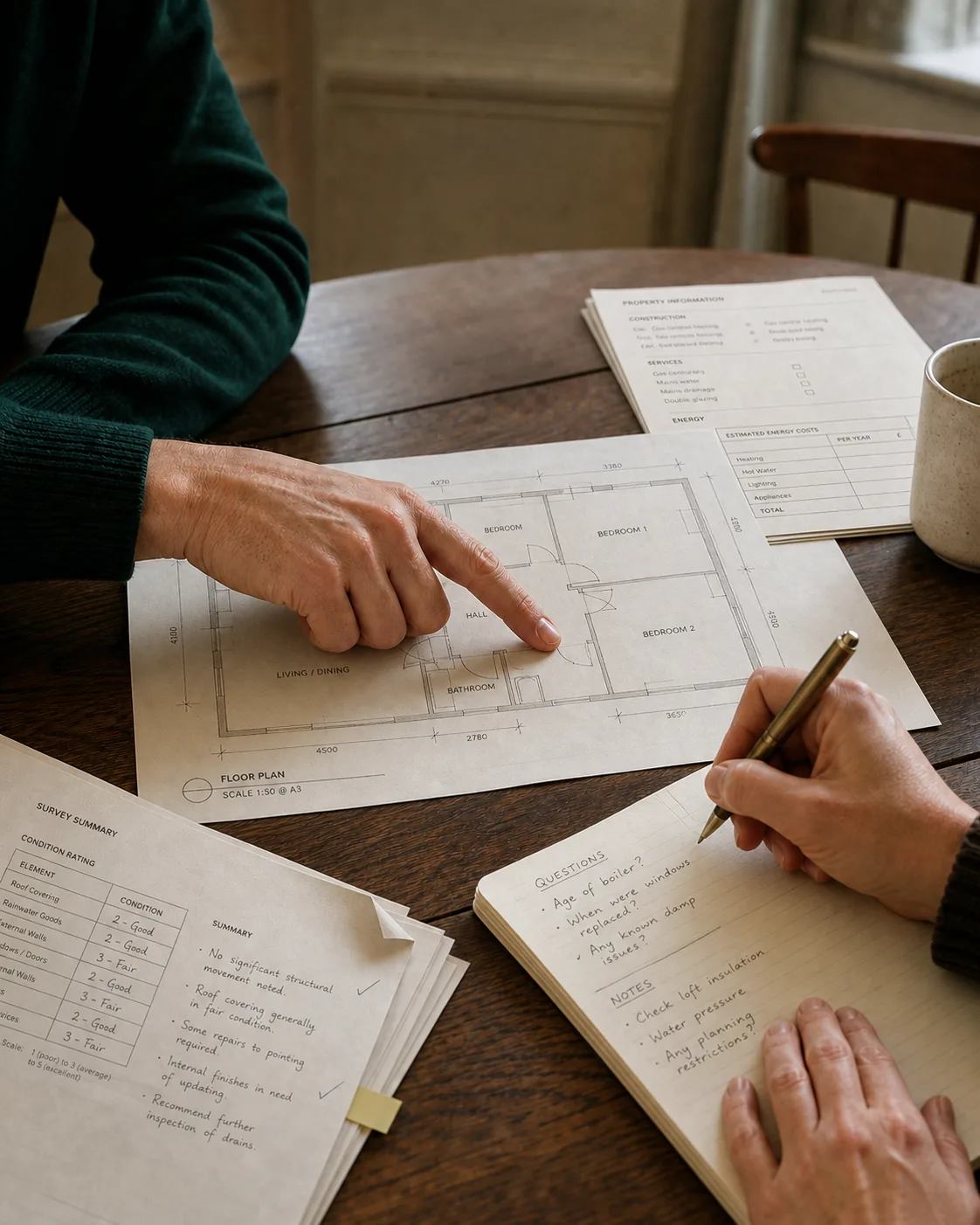
Illustrative buying-guide image

Phase 1 · Prepare · Decision 01 of 09

Before looking at property, work out what you can raise and what the move will cost beyond the purchase price. A lender will assess what it may advance using factors such as your income, regular outgoings, existing commitments, employment and credit history. Your deposit is the portion you provide yourself.

What each of these means (7)
Deposit and mortgage
How much you can put in, and how much a lender is likely to advance on top of it. The two together set your realistic ceiling, not the asking prices you like the look of.
Legal and conveyancing fees
The cost of the solicitor or licensed conveyancer who carries out the legal transfer, plus the search fees they pay on your behalf.
Survey costs
A survey you commission for your own benefit is a separate cost from anything your lender arranges. Decision 06 explains why the two are not interchangeable.
Property tax
Stamp Duty Land Tax applies to property in England and Northern Ireland. Land Transaction Tax applies in Wales. Which one you face depends on where the property is, not where you live.
Moving costs
Removals, storage if the dates do not meet, and the practical expense of getting a household from one address to another.
Ongoing costs
Council tax and maintenance apply from completion. Arrange buildings insurance from the point advised by your conveyancer and lender, which is often exchange. On a leasehold property, also account for service charges and any ground rent payable under the lease.
A contingency
Money held back for what the process turns up. A purchase that only works if nothing goes wrong is a purchase with no margin in it.

Where the price would come from

Split a price into deposit and the rest

£350,000
15%
Deposit you provide
£52,500
Amount to raise
£297,500

Arithmetic only, on the two figures above. It is not a lending decision, a mortgage estimate, an affordability assessment or advice, and it does not include the legal, survey, tax, moving or ongoing costs listed in this decision. What a lender would actually advance is a matter for that lender.

Estimate Stamp Duty separately

Phase 1 · Prepare · Decision 02 of 09

Sellers and agents take a prepared buyer more seriously, and the paperwork is far easier to gather calmly than under pressure once an offer is on the table.

What each of these means (6)
An agreement in principle
Where you are borrowing, a lender can give a written statement estimating what it may lend you. It is worth having before you view. Taking one from a lender does not oblige you to borrow from that lender.
It is not a mortgage offer
An agreement or decision in principle is an estimate based on the information given at the time. The formal offer comes later, after the lender has completed its checks on both you and the property, and it can differ.
Proof of identity and address
Expect to provide photographic identity such as a passport or driving licence, and a recent document confirming your address. Agents and conveyancers are required to carry out these checks.
Proof of deposit and source of funds
Where your money has come from, evidenced. Payslips, a P60, or tax returns and accounts if you are self-employed. A gift towards the deposit usually needs its own written confirmation.
Cash buyers are not exempt
Buying without a mortgage still means evidencing that the funds are available and where they came from.
Send documents carefully
Never send identity or financial documents through a channel you have not verified. Confirm who you are sending them to using contact details you already hold, not details supplied in the request itself.

Phase 1 · Prepare · Decision 03 of 09

Photographs are taken to show a property at its best. A viewing is where you find out how it actually lives, and what the listing did not mention.

What each of these means (4)
Set your priorities first
Location, property type, size, and the practical things a floor plan will not tell you: light through the day, noise, storage, parking, and the journeys you will make every week.
View properly
Walk the whole property, look at it in daylight where you can, and go back a second time before you commit to anything. Photographs are not a substitute for standing in the rooms.
Ask the practical questions
Tenure, council tax band, the energy performance certificate, parking arrangements, which fixtures and fittings are included, whether there is an onward chain, and any works the seller knows about.
For a leasehold property, ask more
How many years remain on the lease, what the service charge is and what it covers, whether ground rent is payable, whether major works are planned, and who manages the building.

Understand the property's EPC

Phase 2 of 3

Offer, then find out what you are buying.

Put your offer through the agent, appoint the person who does the legal work, and commission the survey that reports to you.

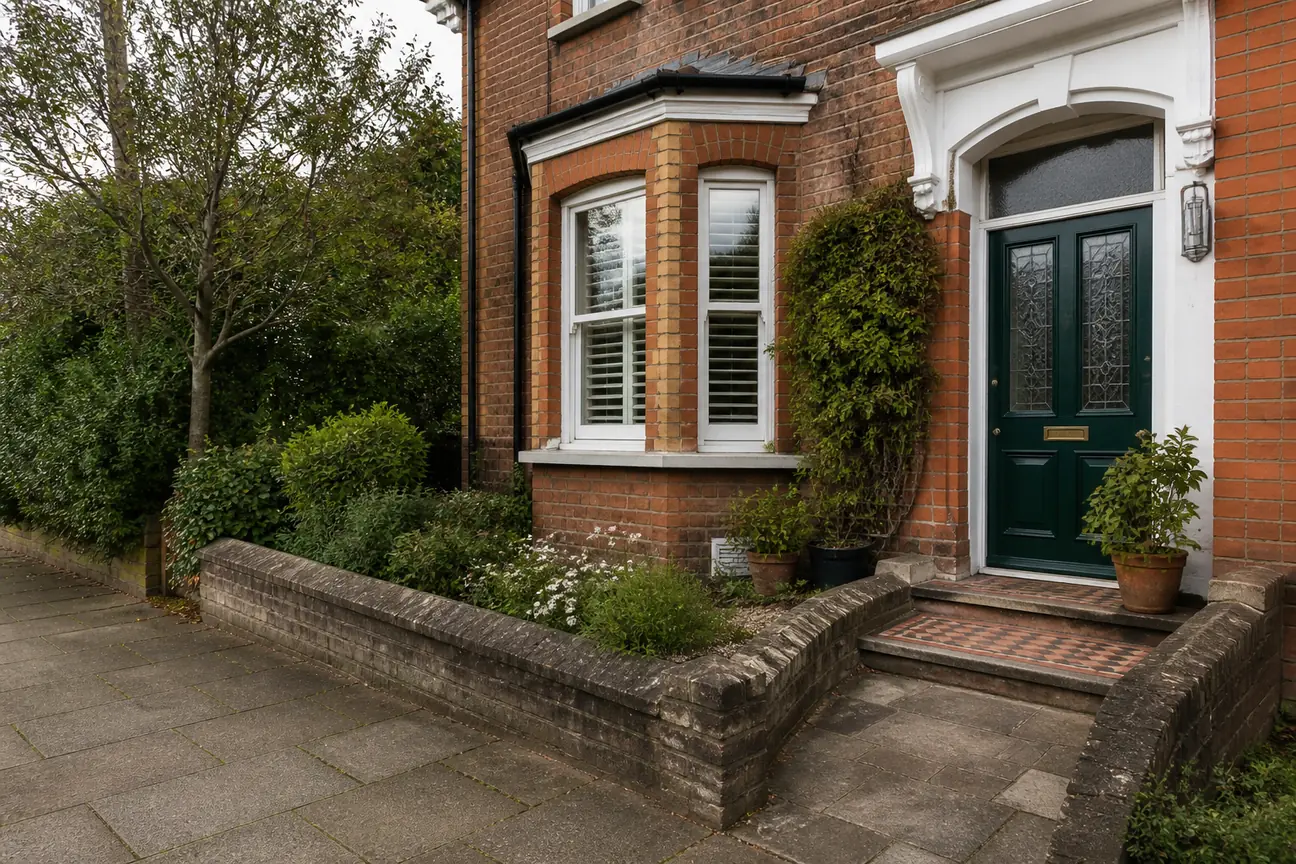
Illustrative buying-guide image

Phase 2 · Offer and verify · Decision 04 of 09

An offer is a proposal, and how you present it matters as much as the number. A seller is weighing certainty as well as price.

What each of these means (5)
Offers go through the agent
An offer on a property Dukes is marketing is normally submitted to Dukes, who put it to the seller. You can talk to us about a property for sale or arrange a viewing at any point.
Say more than the price
State what you are offering, how you are funding it, whether you have a property to sell, and the timing that would suit you. A clearly explained offer is easier for a seller to accept.
An accepted offer is not binding
In England and Wales neither side is legally committed until contracts are exchanged. Until that point either party can still withdraw.
Things may come to light
A survey or the legal investigation can raise matters that genuinely change what you are buying. Those are proper grounds to reconsider, and the right time to raise them is as soon as you know.
Deal straightforwardly
Holding something back to reopen the price shortly before exchange puts the whole transaction, and any chain behind it, at risk. Raise what changes your position when it changes.

Phase 2 · Offer and verify · Decision 05 of 09

The legal transfer of ownership is done by a solicitor or a licensed conveyancer acting for you. Instruct one promptly once your offer is accepted, because the legal work sets the pace of everything that follows.

What each of these means (4)
What they handle
The contract and the title, the property searches, enquiries raised with the seller's side, your lender's requirements, and the arrangements for completion.
Instruct early
The file cannot open until you have appointed someone. A delay here is a delay to every stage after it.
Ask what is and is not included
Get the fee structure and the likely disbursements in writing at the outset, so the total cost of the legal work is known rather than discovered.
Verify bank details independently
Never act on payment instructions that arrive by email alone, and never accept a late change to account details. Confirm them by telephoning your conveyancer on a number you obtained separately, before any money moves.

Phase 2 · Offer and verify · Decision 06 of 09

These two are routinely confused, and the confusion is expensive. They are commissioned for different people and answer different questions.

Lender's valuation

Commissioned for
Your lender
Answers
Is the property adequate security for the loan?
Does not
Report on the condition of the building

It exists to satisfy your lender that the property is adequate security for the loan. It is not a condition report, it is not carried out for you, and it does not protect you if something is wrong with the property.

Your survey

Commissioned for
You
Answers
What condition is the building actually in?
Does not
Decide what your lender will advance

A survey you commission reports on the condition of the building and can identify defects, repairs and matters worth investigating before you are committed.

What each of these means (4)
A lender's valuation is for the lender
It exists to satisfy your lender that the property is adequate security for the loan. It is not a condition report, it is not carried out for you, and it does not protect you if something is wrong with the property.
A survey is for you
A survey you commission reports on the condition of the building and can identify defects, repairs and matters worth investigating before you are committed.
Match the level to the property
Surveys are available at different levels of detail. The age, construction and apparent condition of the property should decide which one is appropriate.
Choose your own professional
Appoint a suitably qualified surveyor of your own choosing and confirm the scope of the inspection before instructing them.

Phase 3 of 3

Read everything, then commit.

Go through the findings with the people qualified to interpret them, exchange when your conveyancer confirms you are ready, and collect the keys.

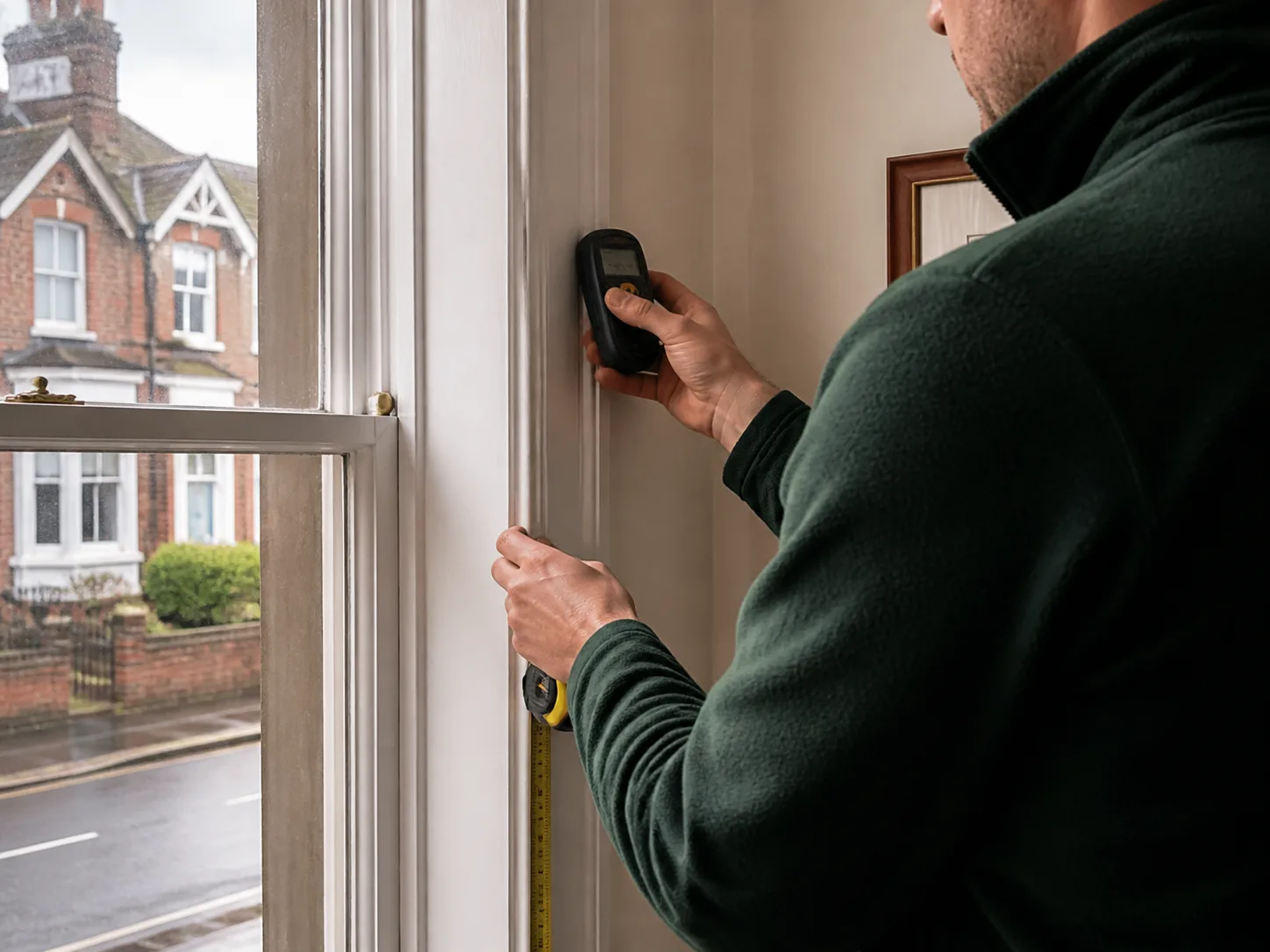
Illustrative buying-guide image

Phase 3 · Commit and complete · Decision 07 of 09

By this point you have searches, a survey and a mortgage offer. This is the stage to read them properly, with the people qualified to interpret them.

What each of these means (5)
Go through the findings
Review the search results, the survey, your mortgage offer and the contract with your conveyancer, your surveyor and your lender as appropriate. Ask about anything you do not follow.
Confirm fixtures and fittings
What is staying and what is leaving should be recorded in the contract paperwork rather than assumed from what you saw at the viewing.
Understand freehold and leasehold
Freehold means you own the building and the land it stands on. Leasehold means you own it for a fixed term under a lease, with obligations to a landlord or management company and, commonly, a service charge. Your conveyancer should explain what your lease actually requires of you.
Check the tax position
For a property in England or Northern Ireland, Stamp Duty Land Tax may be payable. Our calculator gives an illustrative estimate only. It is not tax advice, and the amount depends on your circumstances.
Property in Wales is different
Land Transaction Tax applies in Wales instead of Stamp Duty Land Tax, under its own rates and thresholds. The Dukes calculator does not estimate Land Transaction Tax. Ask your conveyancer or check the Welsh Revenue Authority.

Estimate Stamp Duty

Phase 3 · Commit and complete · Decision 08 of 09

Exchange is the point the transaction becomes real. In England and Wales it is what turns an agreement into a legal commitment on both sides.

What each of these means (5)
What exchange does
Signed contracts are exchanged between the two sides and both parties become legally bound to the sale and purchase.
Deposit and completion date
The deposit and the agreed completion date are normally dealt with at this stage. Your conveyancer will confirm what is required and when.
Do not exchange early
Exchange only when your conveyancer confirms everything is in order: searches, enquiries, survey, funding and the contract itself.
Buildings insurance
Responsibility for the property can pass to you at exchange, and buildings insurance may be required from that moment. Confirm the position with your conveyancer and your lender rather than assuming it starts at completion.
Withdrawing afterwards is serious
Pulling out after exchange can mean losing your deposit and being liable to compensate the seller. It is not a decision to leave open.

Phase 3 · Commit and complete · Decision 09 of 09

Completion is when ownership actually changes hands and the property becomes yours.

What each of these means (4)
The money moves
Your conveyancer transfers the purchase funds to the seller's conveyancer.
Ownership passes and keys are released
Once the funds are received, the sale completes and the keys are released to you.
The legal tidying up
Your conveyancer normally deals with the tax return and any payment due, and with registering the change of ownership at HM Land Registry, as applicable to your purchase.
Your own arrangements
Arrange utilities and council tax from completion, keep buildings insurance in force from the point agreed with your conveyancer and lender, and update your address wherever required. It is worth preparing the list before completion day.

Before you go further

Three things buyers are told are the same, and are not.

  1. An agreement in principle is not a mortgage offer

    The first is a lender's written estimate based on what it knew at the time. The second comes after full checks on you and on the property, and it can come back different.

    Read decision 02

  2. A lender's valuation is not your survey

    The valuation answers the lender's question about security for its loan. Only a survey you commission reports on the condition of the building for your benefit.

    Read decision 06

  3. An accepted offer is not exchanged contracts

    In England and Wales nothing binds either side until contracts are exchanged. Acceptance is an intention, not an obligation.

    Read decision 04

Straight answers

Four answers worth finding quickly.

Is an agreement in principle a mortgage offer?

An agreement or decision in principle is an estimate based on the information given at the time. The formal offer comes later, after the lender has completed its checks on both you and the property, and it can differ.

In full, in decision 02

Is an accepted offer legally binding?

In England and Wales neither side is legally committed until contracts are exchanged. Until that point either party can still withdraw.

In full, in decision 04

What is the difference between a valuation and a survey?

It exists to satisfy your lender that the property is adequate security for the loan. It is not a condition report, it is not carried out for you, and it does not protect you if something is wrong with the property.

In full, in decision 06

When should I instruct a conveyancer?

The file cannot open until you have appointed someone. A delay here is a delay to every stage after it.

In full, in decision 05

Illustrative guidance detail · not Dukes staff

Where Dukes fits

Local guidance when the decision becomes real.

Dukes can go through a listing with you, arrange a viewing, put your offer to the seller and keep the conversation between the two sides moving. That is the part of this guide we actually do.

Mortgage, legal, surveying and tax decisions are not ours to make. Those belong with your lender, your conveyancer, your surveyor and HMRC, and this guide sends you to them by name at every point where they matter.

5 out of 5 stars.
He is approachable, easy to communicate with, and always takes the time to listen and understand any concerns.
Benard C. Read this review on Google (opens in a new tab)

Found a property you want to understand properly?

Ask Dukes about a property Browse available properties

Before you rely on this

This guide is general information, not mortgage, legal, surveying or tax advice. What applies to you depends on the property and on your own circumstances. Confirm any decision with your lender, conveyancer, surveyor, HMRC or another appropriate professional before you act on it.

Dukes Assistant

Tell Dukes what you need

Answer a short set of questions, review the summary, then choose how to contact Dukes. Nothing is sent automatically.

Your answers stay on this page until you choose a contact route. Closing or reloading clears them.

  1. I have a property to let or manage

    A summary about your property, ready to send to Dukes.

    This route asks for:

    • Postcode
    • Property type
    • Bedrooms
    • Current situation
    • What you need handled
    • Start timing
    • Name
    • Best time to reach you
  2. I am looking for a property to rent

    A summary of what you are looking for, ready to send to Dukes.

    This route asks for:

    • Request
    • Property or area
    • Maximum monthly rent
    • Bedrooms
    • Move date
    • Name
  3. I am looking to buy

    A summary of your buying question, ready to send to Dukes.

    This route asks for:

    • Area
    • Home type
    • Bedrooms
    • Budget
    • Buying position
    • Name
  4. I am thinking about selling

    A summary for a direct investor introduction, ready to send to Dukes.

    This route asks for:

    • Postcode
    • Property type
    • Bedrooms
    • Moving timeline
    • Name
    • Best time to reach you
  5. I need to report a repair

    A repair report with the details the property team needs, ready to send to Dukes.

    If anyone is in immediate danger, call 999. If you smell gas, leave the property and call the National Gas Emergency Service on 0800 111 999.

    This route asks for:

    • Name
    • Address
    • Issue type
    • When it started
    • Property safe right now
    • Description

The homepage film is supplied concept footage. Its location, authorship and licence are unconfirmed, it is not represented as Dukes property or Dukes-shot material, and it is not cleared for public release.

© 2026 DUKES ESTATE AGENCY LTD. Company number 14082878.

Speak to Dukes Five ways to get started